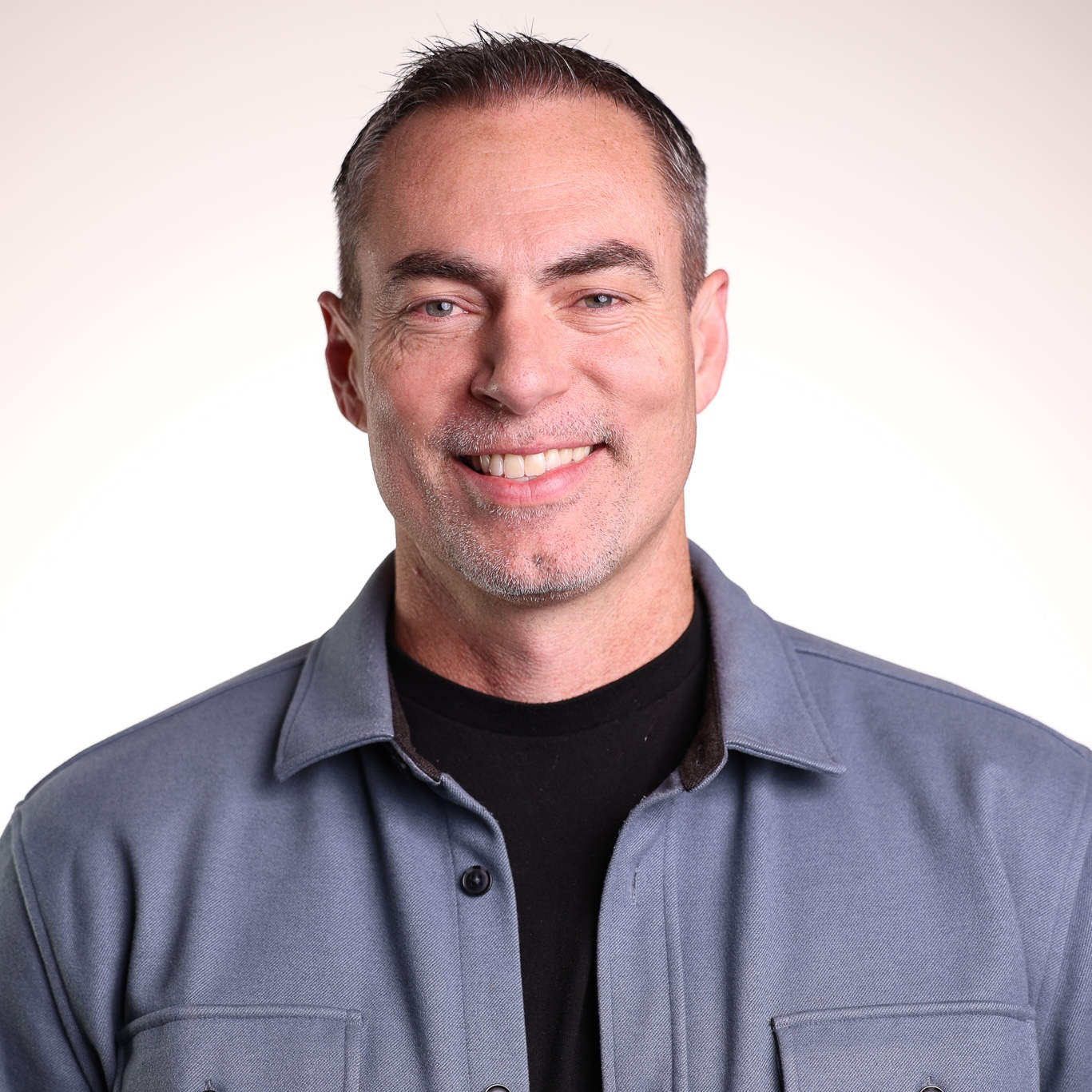


Most brands think they've "tried YouTube" — a few bucks a day, no real strategy, and they wrote it off. Brett Curry disagrees, and he's got the data to back it up. In this live talk from a Google NYC event packed with 8- and 9-figure D2C and omnichannel brands, Brett breaks down the seven plays that separate the 10% of brands actually winning on YouTube from everyone else still guessing.
Inside the episode:
- Why a 190-test study across 74 brands found YouTube's real incremental ROAS runs 3.5x to 10x higher than what shows up in-platform — and why that's a competitive advantage if you're willing to measure it
- How Arctic drove a 230% search lift and a 25% retail sales lift at Walmart from ads that converted zero people on Arctic's own website
- The media mix shift (30–70% awareness/view-based spend) that beat pure demand gen in a women's apparel brand's own incrementality tests
- Why Native Deodorant's run from ~$100M to over $1B in sales at 20% EBITDA leaned hard on top-of-funnel YouTube, and how Dr. Squatch's early YouTube ads set up its $1.5B exit
- The "mashup" formula (think Opopop and What the Foundation) for turning your best Meta and TikTok ads into YouTube winners — and the exact checklist (30+ seconds, voiceover, clear CTA) for knowing which social ads can go straight to YouTube as-is
—
Sponsored by OMG Commerce - go to https://www.omgcommerce.com/contact and request your FREE strategy session today!
—
Chapters:
[00:00] Intro: Live from Google NYC, Brett's "7 Ways to Scale with YouTube Ads" talk and why most brands still get YouTube wrong
[02:59] What is YouTube? 98% trust in creators, "TV + search had a baby," the CTV watch-time lead, unique reach, and YouTube's many viewing modes
[08:08] YouTube-built brands: Dr. Squatch's $1.5B exit and Native's run to $1B in sales
[10:06] Play #1, Incrementality: causal measurement, user vs. geo holdouts, branded search, and Haus's ~3.5x in-platform underreporting finding
[15:52] Play #2, Omnichannel support: the extra +1x from retail, Arctic's CDI/BDI analysis, 19 test markets, 230% search lift, and 25% Walmart lift
[22:00] The snack brand that paused YouTube: Amazon sales and branded search drop within days, then recover once ads resume
[22:50] Play #3, YouTube-first creative: the hook, demo, social proof, CTA formula, plus UGC mashups and brand-formance ads
[26:08] Creative breakdowns, Arctic: the Chase Fly ceramic demo mashup and the Walmart-only brand ad that drove zero D2C sales but big retail lift
[33:18] Creative breakdowns, Native, What the Foundation & Opopop: diverse UGC, founder-led mashups, and 9x16 vs. 16x9 edits
[40:48] Play #4, The creative feedback loop: view rate → hook, CTR → convince, CVR → audience, and why average watch time per impression matters
[44:55] Plays #5 & #6, Campaign structure and porting social ads: Demand Gen plus awareness/view-based campaigns, and what a Meta/TikTok ad needs to run as-is
[48:53] Play #7, Operationalize testing: snapshot vs. photo album, the GPA analogy, the lift trifecta, attributed brand search, and test-over-test comparisons
—
Connect With Brett:
LinkedIn: https://www.linkedin.com/in/thebrettcurry/
YouTube: https://www.youtube.com/channel/UCQmbMwBW8LYDfFAqNqlgTGw
Website: https://www.omgcommerce.com/
Request a Free Strategy Session: https://www.omgcommerce.com/contact
Past guests on eCommerce Evolution include Ezra Firestone, Steve Chou, Drew Sanocki, Jacques Spitzer, Jeremy Horowitz, Ryan Moran, Sean Frank, Andrew Youderian, Ryan McKenzie, Joseph Wilkins, Cody Wittick, Miki Agrawal, Justin Brooke, Nish Samantray, Kurt Elster, John Parkes, Chris Mercer, Rabah Rahil, Bear Handlon, JC Hite, Frederick Vallaeys, Preston Rutherford, Anthony Mink, Bill D'Allessandro, Stephane Colleu, Jeff Oxford, Bryan Porter and more
Transcript:
Brett Curry (00:11):
Hey, Brett Curry here. Welcome to another edition of the eCommerce Evolution Podcast. Today's a special one. I'm bringing you a live recording from an event in New York City, YouTube event at the Google offices. This is me presenting from stage, sharing seven ways to scale with YouTube ads. This was a brand new talk that I put together for this audience. It was a group of eight and nine figure D2C brands, omnichannel brands. And in this talk, I break down what is YouTube and why do so many brands get it wrong and why are so few brands actually utilizing it? Only about 10% of most of the audiences that I talk to are even using YouTube and even fewer are using it successfully. We talk about creative and creative formulas. We talk about incrementality and measurement and halo and understanding what's actually going on when you run a YouTube ad.
(01:06):
I share lots of creative examples. I tell stories about Arctic coolers and how they grew in Walmart stores using YouTube. Talk about one of my favorite snack products and how we saw a huge impact on Amazon when we ran YouTube ads. We talk about creative feedback loops, talk about campaign structure, and really all of the basics and the big things that you need to scale with YouTube. So please enjoy this live presentation, Seven Ways to Scale with YouTube Ads. I ran my first YouTube ad in 2017, and a lot has changed since 2017, but one thing has remained the same, and that is that most brands suck at YouTube. And that's okay, that's why we're here. That is not a judgment thing, that is just an observation. It's just a platform that people haven't understood, haven't spent the time, the resources to really understand and to master a plan on.
(02:07):
But here's the good news. If you haven't cracked the code, your competitors probably haven't either. And so this is going to give you a leg up. If you can make YouTube really work for you, it's going to unlock scale and give you competitive advantage, and that's what we want to walk through. Today, we've had the privilege of working with some amazing brands over the years like Native and Arctic and Dude Wipes and Jones Row Beauty and Baseball Lifestyle 101. And so all that I'm going to share in this portion is based on real data, real experiments, real failures, real successes, like this is real world in the trenches kind of stuff. We're going to get strategic because I think it's really important to understand what do we want YouTube to do for us? What do we believe YouTube can do for us? And then we're going to get tactical and practical, which I think that's the name of your podcast, isn't it?
(02:59):
Nate? Tactical and practical. There you go. Nate Lagos, ladies and gentlemen, give it up for Nate in the back of the room. Going to be up here in just a minute. And yeah, we're going to get tactical and practical as well. We spent a lot of money on YouTube and across other platforms, and so this is based on data, but this is what I believe. I believe YouTube is probably the most powerful platform you are underutilizing or not utilizing at all, and it is because it's misunderstood. So what is YouTube? And Michael just gave a great overview there. I'm going to fill in a couple things and talk about a couple of nuances here. This is interesting where in long-live TikTok, long-live Instagram reels, but if you ask a consumer, who do you trust? What influencers, what content creators do you really trust? 98% will say they trust YouTube creators the most, which does make sense.
(03:52):
Our favorite podcasters are on YouTube. If we subscribe to someone's channel on YouTube, we're spending a lot of time with them, very intentional time where sometimes things on TikTok or Instagram are very algorithmic, flash in the pan, wildly viral, really cool stuff. But people trust YouTube and that's why it's such a great channel to influence the shopping journey. It's also a brand builder. So I actually got my start doing radio and TV back in the day and I fell in love with TV advertising. And then I kind of got into search marketing in the early 2000s. And then when I discovered YouTube, I was like, wait a minute, this is like TV and search if they had a baby and then they did other. This is an amazing combination. I believe that YouTube is a brand builder like TV, but better than TV ever could be.
(04:39):
And it's much more than TV as well. How many of you guys watch YouTube on your connected TV? So you're watching YouTube in your living room with your family. That's almost everybody. Now, this may be harder to confess, but I am interested. Does anybody watch YouTube shorts on their TV screen? Yeah, I remember. So this is a thing, right? I remember I walked in the living room, my teenage daughter, Maggie, she's 15, she was watching YouTube shorts on TV and I just said, "What are you doing? This is a mobile platform for YouTube shorts." She's like, "I don't know. I just like it." And it turns out Maggie's not alone. You guys like it as well, but that is the fastest place YouTube shorts is growing, if I'm not mistaken, is on TV screens. Here's what's crazy. We all stream Netflix and Disney+ and Amazon and all that stuff, but for three years in a row, the platform that people spend the most time on on their smart TV is YouTube.
(05:45):
By a long shot, actually the lead keeps extending. So a few years ago this was like 10% share and now it's 12% share. As everybody is leaning more into streaming, YouTube's lead just continues to extend. And here's what's also kind of cool is that the people you reach on YouTube, you can't necessarily reach them in other places. So 56% cannot be reached on Netflix, 46% cannot be reached on Prime, 64% cannot be reached on Hulu. And it's just powerful. And there's something about, I remember when I was first doing TV ads for local businesses, that's how I got my start when I was in my 20s. I remember talking to business owners and they would say, "I do radio and I think it works. I do these other things. I think it works. When I started TV, I would go to the gas station and people would be like, Hey, saw your TV ads.
(06:36):
I'd go out to eat and people would be like, Hey, are you the guy on TV?" And there's just something about a brand on a TV screen regardless of the channel. It's like, "Hey, that's a legit brand. That's real." And so very, very powerful place to advertise. We're seeing a lot of success with TV screens and YouTube. And Michael talked about this. One of the other things that kind of makes YouTube more complicated is there's not one single mode that someone is in when they're on YouTube. It could be that I'm watching my favorite creator. It could be that I'm watching my favorite podcast, long forms, maybe in the background, I'm maybe just chilling, maybe I'm listening to music, or maybe I'm researching something. I bought a new truck a few years ago and for a while I went down this rabbit hole of four by four influencers on YouTube.
(07:23):
It was like a new leaf for me. I don't even know how it happened. I started looking at... So I ended up with the Toyota Tundra, very happy that I did, but I started looking at things and all of a sudden in the evening my wife's like, "What are you doing?" I'm like, "I'm watching four by four videos on YouTube, but it's kind of what led me to make this truck decision." So that was part searching, part shopping. They're just different modes with YouTube. And so when you're in a different mode, different creative, different measurement, different approach, different campaign structure, all that has to be a little bit different when you're reaching someone in these different modes. So we'll talk about that. Also, the new YouTube creators, this is the new Hollywood, right? Prime now featured Beast Games, but of course Mr. Beast, popular on YouTube.
(08:08):
Do I have any horror movie fans and has anyone seen the movie Obsession? I'm not a horror movie fan, so I have not seen it. But yeah, was it a good movie? Was obsession good? I hear it's just mind-blowing, right? But that was a YouTube director, and I think there's two movies that are just crushing the charts. YouTube directors, low budget and just smashing with entertainment. YouTube is the future, guys. It really is. And we're seeing that play out right now. Any Dr. Squatch fans in the house? Absolutely. And actually Dr. Squatch is here, I think. They're like, "I don't want to raise my hand right now." So you can hear from Jacqu Schwitzer later at Raindrop. They were instrumental in some of the initial ads really broke through for Dr. Squatch. If anybody knows James, James was at our LA event a few months ago, but he starts this ad out by saying, "Your soap is bleep." And then he is like, "Hey, and you are not a dish." And it's just a great ad.
(09:10):
Selling soap to men, that's a hard thing to do. We don't generally care about soap. Dr. Squatch made us care about soap. They did like three million a year early on, then sold to Unilever for 1.5 billion. Pretty amazing success story right there. Native Deodorant, this is a client that we worked with, Raindrop works with. We partnered together. Raindrop did the creative, we did the media. They were like a hundred million or so in revenue when we started working with them and Mois Ali, who was the founder, and then just a couple years ago they were crossing a billion in sales at 20% EBITDA margins. That was from a tweet that Moise Ali posted, but just phenomenal, phenomenal growth. A lot of that driven by YouTube and top of funnel ads and retail sales growth. Pretty amazing. Okay. I've got seven ways, seven ways to scale with YouTube ads.
(10:06):
We'll get tactical, practical, strategic, all those things. Incrementality. How many of you are actively running incrementality tests right now?
(10:18):
That's probably 10% of the room if I had to guess, maybe like eight or something. Anybody like, what is incrementality? Yeah, a few of you. That's awesome. And so let's walk through that. Not necessarily a new concept, but the way this is measured, the way this is executed, it's becoming kind of the buzz and the norm right now, the gold standard, if you will. We're going to have a measurement session later that Tiffany Ryan K is going to lead. We're going to go really deep on this, but let me talk about it from a high level. So incrementality, what it's all about, it's about understanding what is the real impact of this ad? Was this ad or this channel or this campaign, was it causal? Meaning, is that what caused someone to purchase or was it something else? And really the only way to measure that is in a way that allows you to understand what would've happened if we hadn't run the ad, right?
(11:15):
What would've happened to sales if we never did this YouTube initiative? If we never ran this ad, what would've happened? And so there's different ways to do incrementality studies. You got user holdouts, so you're advertising to one group of users, not advertising to another, measuring the difference, or you're advertising to one geo and you're holding out another geo and you're measuring the difference. But ultimately what this tells you is this is what this did for the business. It is the ultimate truth in advertising. I think we can think about this example. Not everything we do is incremental, right? Now, I know I'm at a Google office. I'm a longtime Google fanboy. I believe in brand defense and branded search ads. I believe in it. We run it for essentially every client. But if you had to turn off branded search for a couple days, a couple weeks, what would happen to your business?
(12:09):
Some of you, you would feel it. If you're in a very competitive space, some of you would feel it. Others of you, maybe, maybe not, maybe just a little bit, you might not feel it a ton. Other forms of advertising, TV, YouTube, for some of you, Meta, you shut that ad off and you see the pipeline dry up. You feel it, you see it, you see it in Shopify, you see it in Google Analytics, you shut something off, it slows down the business. That is incrementality, right? What ads are causing the business to grow? Now again, and we've read a lot of incrementality studies. We have some brands where branded search is highly incremental, and so you do need to look at it, but understanding what's really driving the business here, how does my mix work together to close a deal? Super, super important. I believe YouTube, the most incremental platform out there that you are not fully using, and so let's talk about that.
(13:07):
House Analytics, so they're one of the partners for incrementality studies. They believe, and they put out a study that shows that whatever you're seeing in platform, so if you're looking at YouTube in platform and it's a one ROAS, it's a 0.3 ROAS, whatever, you are probably actually seeing almost three and a half times that in terms of incremental impact. And so there's a couple things they did. They did this study with 190 incrementality tests across 74 brands. These were brands who were investing in YouTube as well. So they were spending at least 30% of their meta budget, they were spending on YouTube. So they weren't dabbling, they weren't doing like a hundred bucks a day on YouTube, they were investing in the platform. And these were bigger brands like AG1, Our Rings, Ridge Wallets, things like that. And so they measured this, and this is what they found that on average, almost 3.
(13:56):
5X better incremental results than in platform. And so another way to look at that is in platform is under reporting by about 70%, but the incrementality factor was as high as 10X. So maybe you're seeing a one in platform, but it's actually delivering a 10X in incremental ROAS. And here is the beautiful part, that number four, almost all of the customers were new, net new to the brand. So finding net new customers, finding people that aren't already influenced by other channels, people that haven't already seen you on Meta or haven't already seen you on TikTok, finding net new customers, YouTube is amazing at that. So why is that? Google has built Google Analytics measurement and knowing what's going on, nobody's better than Google. Why is YouTube hard to manage or hard to measure? There's a few things going on here, and we'll talk more about this as we go, but one is that just not as many people click on YouTube ads, right?
(14:50):
Everybody here said almost the whole room said they watch YouTube on TV. You know what you don't do with your TV? You do not click on it, right? There is that send to phone option. There's a few things that you can measure, but by and large, we're watching TV, we're watching TV. I'm going to see that. I'm going to come back later. I'm not going to click on it. So even at its best, YouTube has about half the click-through rate that Meta has. So Meta just a little easier to connect the dots. 50% of views are on TV screens, and then we've all got multiple logins, like multiple Gmails. I don't know how many I have, a lot. My family's got a bunch. Sometimes connecting all that is a little bit harder, whereas Meta, you got one Facebook account, and so it's just a little easier to connect all those dots.
(15:31):
So here's the thing, I actually think the difficulty of measuring YouTube is a competitive advantage for you because if you figure it out, if you do it and we can help you, today's going to help you, it gives you an edge over the competition. So obsess about incrementality, more on that later, happy to at the breaks or afterwards or a virtual session later, go really deep on that. But incrementality is where it's at if you're going to unlock scale and growth. The next thing, omnichannel support. Looking at the survey you guys filled out to start most of the room, most of you are selling on multiple channels. So you're Shopify, so you're D2C. You are also Amazon, you're also in retail stores, which is amazing. And what's really cool about that is that YouTube helps even more when you're multichannel. So when you're multichannel or omnichannel, YouTube helps a lot.
(16:22):
So I'm going to break a couple things down here for you. If you are looking at in retail stores as well, you can basically add another one X to those incremental results. So you're three and a half times more incremental when looking at platform, when you're looking at true incremental impact versus in platform. If you are in retail stores, add another one to that. So now you're about four and a half times more incremental than what you're seeing in platform. And a lot of people just buy where they want to buy. They see the ad, they go buy where they choose to purchase. Do I have any Arctic fans in the house? Arctic drinkware, Arctic coolers? A couple of you. Yes. Great. I'm a huge, huge Arctic fan. We met them several years ago and they said, "Hey, can we use YouTube to drive Walmart sales lift?
(17:11):
We're now in Walmart's coast to coast. Can we use YouTube to get people to buy in Walmart?" And we said, "Yes, absolutely. So what do we do?" Well, I'll show you some of the ads in a minute, but what we did is we first started with a CDI BDI analysis. Anybody run one of these for your brand? CI/BDI? Yeah, that was only one hand and it was Michael Burke, so there you go. You guys need to do this and we can help you do this Google. Google does it. Here's what this does. This looks at real data, Google's search behavioral data. So it's not survey based or things like that, looking at people's search patterns. Where in the country, and this is looking at TV DMAs, designated market areas, looking at metros basically. Where in the country does your category, so in this case wheeled coolers, where is there high demand?
(18:01):
Where's there low demand for wheeled coolers based on search behavior? Where then is there high and low brand demand, meaning people searching for Arctic or people not searching for Arctic? And then it breaks it up into this quadrant, right? And so then we're looking at opportunities of, okay, where would our media dollars be most effective? And we've actually found, and this can vary for different brands in different categories, but the orange where there's high CDI, low BDI, so category is rocking, people are searching for wheeled coolers, but they don't really know you, relatively speaking. Great opportunity. We've also found, believe it or not, in those green areas where it's high and high, so a lot of people are looking for wheel coolers, a lot of people know about you as well, it's usually never saturated. There's still room to grow. We found those markets to be really good as well.
(18:53):
But basically what we did is we mapped out 19 test markets, 19 control markets for Arctic, and then we measured across a variety of things, retail sales, post-purchase surveys, search lift. This is one of my other favorite ways to measure search lift because if you think about it, this is the most likely activity someone's going to take. I see the YouTube ad, I'm not clicking because I'm watching something, but if I'm interested, I'm going to go back and search later. And so for Arctic, we saw about a 230% lift in searches on mobile and then across all platforms over time, people seeing the ads and saying, "Hey, I want to learn more. I want to check out Arctic a little bit closer." And then we started measuring retail sales and they've got a data science team started looking at, okay, in these markets where we're running YouTube ads, what does the lift look like?
(19:43):
What is the lift there compared to other markets here, just a couple call outs, but 25% lift across a big swath of those test markets. I did put Springfield, Missouri in there as well. Has anybody been to Springfield, Missouri? Home of Bass Pro, a few of you. Why'd you go to Springfield, Missouri? Just curious. Omaha. Love it. I always think Peyton Manning when I hear Omaha. I just want to start yelling Omaha.
(20:09):
So Team OMG, the HQ is in Springfield, Missouri. We're a distributed team, people are everywhere. But I put that up there because I think that was all me. So YouTube was responsible for the rest of it. My wife just went crazy. We bought coolers for everybody we know. We had bought drinkware for... There was one Christmas where it was an Arctic crew. Everybody got Arctic, so that was us. But the rest of it was YouTube, and it was amazing. We actually won an Agency Excellence Award for it. I realized I should have... I don't know what I was doing with that outfit, but we won an Agency Excellence Award. It was amazing. And since YouTube has become a key part of Arctic's growth strategy and their media mix. Hey there. Thanks for tuning in to the eCommerce Evolution Podcast. Want to take just a minute and tell you a little bit about my agency, OMG Commerce.
(20:56):
Now, we work with some of your favorite eight and nine figure D2C and omnichannel brands, and our specialty is profitable scale. We love taking great brands and amplifying their growth profitably. We've helped a number of brands go from zero on YouTube to spending as much as a million dollars in 90 days while hitting a CAC or CPA target. We've also helped multiple brands launch on Amazon or just add scale to Amazon. We took Boom Beauty from zero to almost $6 million in sales their first 12 months on Amazon. So if you're not satisfied with your current level of growth, if you're looking to diversify channels, maybe you're a little too dependent on Meta and you want to add YouTube or you're not pleased with your Amazon growth, then we need to chat. So visit us at omgcommerce.com, click the let's talk button. We'd love to schedule a complimentary strategy session with you.
(22:00):
And with that, back to the show. And so going omnichannel, which most of you are, YouTube is potentially one of the biggest support mediums with support channels for omnichannel. We also saw this. We have a snack brand that we've worked with, and during last holiday they said, "Hey, we got things going on. We need you to pause YouTube for a little bit." I always hate hearing that, and it's one of those things where I'm like, "I don't think you should do that," but they needed to, and so we did. Kid you not, it was maybe two to three days later, they called us up and they said, "Hey, Amazon sales are down. Branded search is down on Amazon. Overall sales on Amazon are down." The only thing we changed was YouTube, right? So this wasn't Amazon ads that did it, it was YouTube. And so we fired YouTube back up.
(22:50):
Sales resumed on Amazon and they have not paused since. And so it's one of those things where even I'm telling you that this is the way it is and you're going to be like, "Yeah, I believe that. Academically, I believe that." And then later you're going to be like, "Well, let's pause it." And then you're going to see that sales are going to go down. And so it's an omnichannel helper. It just is, and it's one of the absolute best. Okay. Now we'll talk media in a minute, but the most fun, the thing we love to look at is ads. And let's talk about creative that really works on YouTube. This is one of the things we noticed. We do a lot of consulting with big brands that come to us and they say, "Hey, dabbled in YouTube, tried YouTube, it's not working. What can you do to help?" One of the biggest issues is it's the wrong creative, right?
(23:34):
It's creative that's not YouTube first. It's creative that's not optimized for YouTube. YouTube wasn't even a thought in the mind of the creators or the editors. They weren't even thinking about YouTube. And so that's one of the biggest issues. We're going to fix that actually right now. And so I hate to get too formulaic because I think sometimes true creativity goes a little bit outside of the box, but there's a lot of room to create within some of these bullet points or within this formula. But essentially every good YouTube ad has these elements, right? We need a hook for most of what you're going to run. It's going to be skippable in-stream ads. You got five seconds, five seconds before that magical or not magical, depending on if you're a consumer or an advertiser. Skip ad button pops up. You got five seconds to make a customer say maybe.
(24:27):
Maybe I'll keep watching. Maybe I'll check this out. Maybe I'll dig deeper. You got five seconds. So the hook, the hook's got to be right. I'll show you how to measure the hook in a minute. Product demo. We want to see this is video. We want to see the product in action. We want to see it live. We want you to show us that this is working. Don't just tell us. We want social proof because we're skeptical. We got some objections holding us back. Is this going to be too expensive? How long will it take to work? Are you really full of it or is this company different than what I've tried before? Overcoming those objections. And then a CTA and an offer also really, really important. And then here's what I also believe, having a bit of a mix of things going on. And there was a time when I would've said, "Hey, don't take your best social ads.
(25:13):
The ad that's ripping on TikTok or that's ripping on Meta, don't even try on YouTube. It's probably not going to work." But as of about a year, year and a half, that story has changed. We are now seeing some of the top Meta ads, top TikTok ads crushing on YouTube, especially if you can mash them up. I'm going to show you a bunch of examples here in just a minute. I'm also a big fan of the brand formance type ads. So these are part branding, but they're also performance. They're getting you to take an action direct response if you want to use that language. I believe nobody better in the game than Raindrop. So Jacques Spitzer's going to be here after lunch kind of breaking down their approach to ads. Almost always though, if we look at accounts that are spending several hundred thousand a month, several million a month on YouTube, UGC and influencer mashups, almost always one of the top five ads, almost always.
(26:08):
I'm going to show you how to do those in just a minute. And then sometimes new concepts like explainers and demos and things like that, they all work together. And so let's actually break down some ads right now. So we're going to start with Arctic, I believe. So we're going to watch this ad. I think one of the best ways to learn is to look at good examples. All of these ads did well, so I'm going to play this and we'll talk about it.
Speaker 2 (26:31):
This is a ceramic mug. This is a ceramic lined stainless steel mug from Arctic. One breaks, one doesn't. Arctic now uses ceramic coating in all their drinkware. The idea is to keep your drink tasting pure without that metallic tang some cups have. We're going to test these for heat retention, ice retention, paste and leaks and find out if this ceramic coating is the real deal or just marketing flow. I filled each Arctic with the hot water and recorded the starting temp. Then I set them all in a cooler chill with ice. Taste is where ceramic makes its case. So I did a blind taste test with the team, one old stainless Arctic and one new ceramic lined Arctic. Now for cold, I filled each drink receptacle to the brim with ice, then I added tap water. With lids screwed on and shut tight, I tipped each cup over on the table.
(27:18):
Sure enough, none of them looked. The mug didn't leak at all. Neither did the 20 ounce tumbler. After two hours and 15 minutes, the 16 ounce mug was still smack dab in the middle of ideal coffee drinking temperature range. The jug, it still has ice now, two and a half days later. All in favor of B. The metallic taste was extremely strong. Yeah, you're correct. You are correct. I remember this just felt better. It just had a cleaner flavor. I'm proud of your guys' acumens of taste. So yeah, eramic coating, it's not hype. It keeps water fresh and hot drinks tasting clean without giving up performance anywhere else.
Brett Curry (27:55):
Amazing. Anybody drink out of a tumbler and you're like, "That kind of tastes like a penny?" Anybody here? You get that metallic taste. I've noticed that. I stopped drinking coffee out of tumblers because of that, but Arctic solve it. And so the ceramic lining really does make a difference. And so what we did here, these were a bunch of, that's a guy named Chase Fly, brilliant creator. He created these really long demos, and some of these were very long videos. And so what we looked at is we were like, "Hey, what if we still kept the educational pieces of it? We still kept the core demonstration pieces of this ad, kept all the really compelling stuff, but we made it faster paced, allowed the authenticity of Chase to come through, but let's make this faster paced." And so that's the edit we came up with.
(28:45):
It was a smash. Their drinkware line is doing very, very well. But let me ask you, what did you like about that ad? What stood out about that ad to you? Great demos. Great demos. Yeah. Proof, says Ben. Absolutely. One thing to tell us, but different than to show us, and that definitely showed, yeah, are the call-outs.
(29:12):
Relatable problem. Yeah. So you look at that and you're like, "Yeah, I feel that. Either it doesn't keep my coffee hot enough, long enough, or it doesn't keep my cold drink cold long enough, or I don't like the taste or something. I knock it over, still spills. It's a tumbler, it's not supposed to spill." And so very relatable problems. This wasn't just esoteric, big slice of life, random stuff where you watch that and you're like, "What was that ad about? I don't even know what that ad was about." It was very directly applicable to drinkware, so that ad has been a smash. Now this is more of a brand ad, but I'm going to play this.This is shorter. We'll talk a little bit about this one as well.
Speaker 3 (29:51):
What do you love about being outdoors, lighting the barbecue, hitting the trail with a few friends, cheering your team on at the tailgate? However you spend your time outside, Arctic is made for it. Made for real life adventures, made for real life budgets, made with quality materials and innovative designs that lock in the cold. Engineered the right way, built to last, never ever overpriced.
Brett Curry (30:22):
Great. So what did you like about that ad? Very different feel, right? Chase Fly, very YouTubey, very influencer. What did you like about that ad? Showed you where to get it. Showed you where to get it? Yeah. So here's what's crazy about this. I did make a comment earlier where people will buy where they want to buy, and that is true. Some people only buy on Amazon. My dad buying online only buys on Amazon. Some people like to go to the stores. But here's what's interesting. If you never talk about certain options, people won't take those options, most likely. We still are not going to do the legwork to maybe figure out where your products are. So that was a good ad. We ran some other ads like that and they all mentioned Walmart. Walmart exclusively, and some of them like this one. When we watched the performance in platform, guess what the conversion rate was online for these ads?
(31:13):
How many people you think purchased from one of those ads and they bought on the Arctic website? It was zero. Literally zero. Nobody did. I mean, maybe somebody did, but we couldn't measure, couldn't see it at all, but we saw massive lift to Walmart. So I think that really underscores some people just aren't going to think too deeply about what you say. You say it's available here, I'll mostly think about that. And so maybe I'll look at it next time I'm in Walmart. But yeah, this showed you where to buy it.What else did you like about this ad? Yeah. Points of entry.
(31:54):
At least one of them you're probably doing. Yes. Lots of points of entry. So again, this had some cool feel to it, beautiful sunsets, beautiful backyard barbecue, all that, but it was very relatable. And it said, "Hey, maybe it's a backyard barbecue kind of person. I'm not very outdoorsy. I'm a little more indoorsy." Actually, that's not true for me, but some people are like that. I like backyard barbecues. I'm not going hiking. But maybe you do like to hike, maybe you're on the river and things like that. So it gives you lots of entry points. Great call out. Totally agree. What else?
(32:28):
The people look like they shop at Walmart. Is that a compliment or is that... I'm from the Midwest, man. So Springfield, Missouri, we're like an hour and a half from Bentonville, Arkansas. Here's what I hear a lot of people saying though when they go, they're like, "I don't want to go to Arkansas." But then they get there and they're like, "Good restaurants." It's the Mountain Biking Capital of the US, Bentonville, Arkansas. Not kidding. It's in the Ozark Mountains or whatever. And just a beautiful, beautiful place. And so yeah, this ad just works. And what's cool is you take a brand performance style ad like that, you couple it with ads like the Chase Fly Mashup. You get really good things happening on YouTube. They pair very well together. I'm going to play this one from Native. This is not Native's biggest line, but this was a great ad for Native for their moisturizer.
(33:18):
Native's
Speaker 4 (33:18):
Moisturizing lotion helps my skin to feel so hydrated and smooth. I just love the fact that it keeps your skin moisturized all day. With a new and improved formula. And I just love how rich and creamy the formula is. They provide a deep hydration with a lightweight field. It's super hydrating, but also lightweight and sinks into your skin super fast. You're going to love it. The formula absorbs in the skin so easily without leaving a residue. And don't even get me started on how good they smell. It just smells so yummy. And also mention it comes in seven of their best scents. You smell good. It's quite literally the best compliment.
Brett Curry (33:50):
Okay. What did you think of that ad? And I'm happy to send any of these ads to you guys later if you'd like to see them. What'd you like about that native ad? Did that keep your attention? I mean, I know you're stuck in this room, but did it keep your attention pretty well? We'll go here and then we'll go back there. Yes. Yeah. Yeah. So all of those were influencers shot independently. They were all saying their own thing. But what we tried to do is think about, hey, hair type, body type, skin type, personality. Let's get some diversity so that whoever our ideal customers, they see themselves in that ad, right? Because we've shown ads. We used to do some haircare products. I remember showing it live and in person to some people and a couple of the ladies who were in the room watching, they're like, "Ah, her hair's way thinner than mine.
(34:37):
I don't know. I don't think that's going to work." So people need to see themselves in the ad before they'll believe it. Yes, sir, in the back.
(34:53):
Yeah, exactly. So top performing UGC, they're getting it over to YouTube. And here's the secret. We say, "Hey, let's get the top 10 Meta ads a month. We're going to chop those up. We're going to put them into mashups." So now we already know different elements of these clips work. They work on social media. Now we're going to mash them up, put them in a format that really sings for YouTube, and we're going to run that and it just works. And so that ad format had been a smash. So you're going to hear it from my man, Cody Plofker in a minute, but I want to play this ad. This is for What the Foundation. They have always found success leaning into Bobby Brown, the creator. And so you get to hear a little bit of Bobby, a little bit from creators. That's another really interesting way to look at a mashup.
(35:39):
Not just customers, not just creators, but founders as well. And so let's play this one.
Speaker 5 (35:46):
It is traditional foundation making you look worse. Traditional foundations are not great for lines in the face.
Speaker 4 (35:52):
It's sticky and gooey and it really emphasizes my wrinkles and dark spots.
Speaker 5 (35:58):
We need something different. We need something moisturizing that gives a bit of color to counteract dullness and gives our skin life. What the foundation for me is the magic formula that does it for my skin. It's like facelift in a jar. It just makes my skin look good, gives me a lift, and I look like I'm not wearing anything. It is outrageously great for very dry skin. The moisture comes from natural oils that we've included in the formula, and some of us don't even need a moisturizer with it. And I don't think you'll ever go back to using traditional foundation once you discover this.
Speaker 4 (36:30):
I think this is amazing because it's a moisturizer as well. It contains a really unique -
Brett Curry (36:36):
For second time, I'm going to move on just a little bit, but what did you like about that? What'd you like about that ad? What do you think about the hook? Or actually it doesn't have to be about the hook, but go ahead bud. Yeah. Yeah. Flowed pretty smoothly. Always had that split screen. So we're seeing Bobby, but we're seeing the product. We're seeing real customers applying it. We're seeing some before and after and that sort of thing. So flowed really smoothly. Absolutely. What else? What else did you like about that ad? Credibility. Yeah. And what gave it that credibility, would you say?
(37:16):
Yeah, yeah, yeah. Combination of the founder and actual customers. Michael Burke and I were talking in the green room earlier this morning. We were like, founder videos, man, they just work. Even if you like Wendy's, and you remember back when Dave Thompson was still alive and he was in the ads, he hated being in TV ads, and so he'd always try to get out of the TV ads, but they would always do testing. They were like, "Hey, the ads with you in them do better." So he just kept being in the Wendy's ads. Something about it. Nobody is as relatable, passionate as a good founder in a video. So it gives authenticity, but then you also have real customers, real creators talking as well. Yeah. What else did you like about it? Yeah. Showing the product and saying, "Hey, it's like a facelift in a jar." I love that line.
(38:12):
And then it's like, "But it looks like I'm wearing nothing as well," which is a beautiful combo. And I love the hook too. She said, "Hey, is traditional foundation making you look worse?" It's a great way to open, and I think getting right to the heart of this is probably a pain point. This is probably an issue you have, so we're going to address that right out of the gate. So that ad, absolutely.
Speaker 4 (38:33):
Wait,
Brett Curry (38:33):
What is
Speaker 4 (38:33):
This?
Speaker 3 (38:33):
Oh God, this
Brett Curry (38:34):
Is
Speaker 3 (38:34):
Amazing. That's good.
Speaker 2 (38:36):
They got pickled, fancy butter, super butter. It's delicious. Maui heat. This one has a fiery touch to it. So good.
Speaker 6 (38:48):
And that's perfect. That is unbelievably good.
Speaker 5 (38:51):
This is the best popcorn ever, and it comes from opopop.com.
Speaker 4 (38:55):
This is the bad popcorn I've ever had in my life. Hands down. It's
Speaker 2 (39:00):
Got this really unique flavor to it. Every kernel. Every kernel. So
Brett Curry (39:04):
You got to get the idea that was a nine by 16 mashup. Shout out to the Ad Create team and actually Barry Hot. Is Berry Hot in the room? He's coming later. He was actually one of the taste testers in that Ad Berry Hot's going to be here. But that mashup was a real winner and I love the way that fits on mobile. So we always try to do is we take, hey, the mashup in a 16 by nine, 16 by nine is still the core of YouTube. A lot of people watch on their mobile phones still in 16 by nine. Of course, 50% of all views are on TV. We need the 16 by nine, but then getting nine by 16 edits of those also very, very powerful. So that ad did very well. And then here's a version and you'll get to hear more from Raindrop later, but this was an ad that the team at Raindrop put together.
(39:46):
I'll play this as well.
Speaker 4 (39:48):
I'll make opopop.
Speaker 6 (39:54):
In a world where popcorn just doesn't pop anymore, one name dares to be different. Opopop. Opopop. Each kernel is flavor wrapped so every bite packs a punch. Opopop. So rich, so buttery. Opopop.
Speaker 4 (40:13):
Opopop.
Speaker 6 (40:15):
So sweet.
Speaker 4 (40:16):
Opopop.
Speaker 6 (40:17):
Opopop. You'll fall in love with popcorn again.
Brett Curry (40:24):
Opopop.
Speaker 6 (40:26):
And don't worry if you run out.
Brett Curry (40:27):
Opop, pop. Opo pop.
Speaker 6 (40:34):
Because you can subscribe and save. Movie night has a new leading snack. Go to opopop.com to try it for yourself.
Brett Curry (40:48):
Legitimately, some of the best popcorn you'll ever have. It's fantastic. And so those two styles really paired well together, right? The UGC creator style mashup, the brand performance ads. We were running those largely on TV screens, incredible view rate, incredible engagement. And so that pairing worked really, really well together. So I'll talk through briefly the next few points here and then we're going to get Cody on stage and talk growth with him. But it's not just about the creative we launch with. It's not just about taking the best of social media or the best of what could work on TV and adapting that for YouTube. That's huge, but then you got to have a creative feedback loop. So we've got to be looking at the data and saying, what is the data telling us about these ads? And then how do we iterate and improve from here?
(41:37):
So we always need to be looking at, hey, hooks, demos, and offers. How are we going to be mixing and matching and testing those sort of things? And so a few rules of thumb. If the view rate is low, so you're looking at all your top performing ads, so ads that are doing pretty well on YouTube, look at the view rate. What is the view rate for those ads? If the ad is performing pretty well, so it's like, Hey, this is a keeper, but the view rate is low, then you want to look at let's improve the hook. Let's tweak the hook because the hook is what gets someone to say, maybe I'll keep watching, maybe I'll keep engaging with this ad. Now, what about if it's a relatively low click-through rate? I know I said not a lot of people click on YouTube and that is true, but still relatively speaking, some people will click on YouTube.
(42:22):
If there's a lower than average click-through rate on an ad, it's usually a couple of things. It's either we did not convince them, we did not show them this drinkware is different, this no makeup makeup look is different. We either didn't convince them or we didn't give them a reason to click. Maybe we just said, "It's awesome, go buy it at Walmart." They're like, "Great, I'll do that. I'm not going to click." So if there's a low CTR, why is that? And let's fix that. And then if it's a relatively low conversion rate, either we're potentially reaching the wrong person. Occasionally that happens. We've seen this with a few brands where we get great engagement with these ads, great stuff happens, but nobody's buying. And so we're just not quite reaching the right person or we don't have the right ad, audience and landing page combo where they see the ad, then what they land on the website is not what they were hoping for and it's not enough to get them to purchase.
(43:19):
And so constantly looking at all those metrics and then iterating is, that's the key because you're never, never going to just go create three ads for YouTube and that's as good as it gets. It's a constant process of getting better and iterating and improving. This is a sheet that we put together for our advertisers on a weekly basis looking at, okay, in platform performance or ROAS of course, view rate in stream and shorts, click through rate. We'll pull in the hook, we'll pull in the timestamp for when the CTA happens. And then we'll also, and I'll share this metric as well on the far right, average watch time per impression. Have you ever looked at what kind of watch time do your Meta ads get on average? Does anybody know what's the average watch time for Meta ads? Six seconds for some people say, and some people that get good results for Meta, like two, three, four, five, six, whatever.
(44:18):
Some of these ads, look at this one down here, it's a 16 by nine, 31 seconds average watch time per impression. That one that spent 28,000, 23 seconds, that's the average. So people that saw the ad on average watch 23 seconds, magical things happen. When people engage with your brand for that long, they see the message, they hear the story, they're engaged, they're compelled, they take action. That's one of the overlooked metrics and one of the metrics that we've just seen this over and over again. As that watch time goes up, conversions elsewhere in the funnel increase. They just do. They just do people get convinced and then they take action. So you need that creative feedback loop. Let's talk briefly about campaign structure. I think we get too nerdy on media. Some of you would love it. Some of you that I would be in this camp, I could talk all day about media, like the numbers behind media.
(45:09):
Some of you would go to sleep, right? So we're going to keep this very, very brief. But campaign structure innovations, here's some interesting things we're seeing. Michael Burke talked about demand gen. We love demand gen. Demand gen is mostly what we do with YouTube. However, we are seeing more and more success with awareness campaigns and view-based campaigns and kind of the fusion of those with demand gen campaigns. So I'll talk about that a little bit. If you're trying to get retail sales lift like Arctic or like others we've worked with, like Native and stuff, we actually see better results if call it 30, 40, 50, maybe as high as 70% of your mix is with awareness campaigns and view-based campaigns. You can still measure what's going on if you're doing incrementality studies and you're doing geo holdouts and things like that, but you get lower cost per reach.
(45:58):
Engagement is off the charts. You can still be very targeted. Watch time goes way up when you're doing awareness and view-based campaigns. So if you're trying to drive overall lift, you got to lean into view-based campaigns. If you're doing a little more overall sales lift, then probably you'll lean more into demand gen, but we've seen this again and again. We actually saw this with a women's apparel brand recently and a few others where they've done multiple house incrementality studies and their best studies to date were at least 30% view-based campaigns. So where they did some studies that were just demand gen, they beat those results by adding in some awareness and some view-based campaigns. Pretty powerful. If you're only D2C, like you're only selling D2C, which is fine, then you're going to want to mostly go demand gen and I think that's generally the best place to start.
(46:45):
But this is one of those areas where thinking a little bit outside the box is going to pay off and the media does matter. And the Raindrop team talks about this, Jacques is going to talk about this later. They've created some amazing ads and you'll see a lot of them and they put that in the hand of a buyer that only knows Meta, and guess what? It doesn't work on YouTube. And then they come to a buyer that does know YouTube like OMG and the ad just takes off. And so campaign structure innovation is important. Now, this may be one of the most practical bits of this whole talk. I'll keep this brief. It's simple. But if we wanted a pipeline of our top Meta, top TikTok ads, which of those ads should we run on YouTube? I think almost any of them could be slice and diced and turned into a mashup and work on YouTube, but some of them, a few of them will work just as they are, directly like they are from social over to YouTube.
(47:38):
So what are those like? This is what they need, in my opinion, 30 seconds or longer. So we've never really, if we're trying to measure incremental lift, we're trying to measure click through conversions, I like ads that are longer than 30 seconds. I've seen more tangible results when it's longer than 30 seconds. It needs a voiceover, right? We watch YouTube with the sound on. We're engaged. We're listening. And so an audible hook, a voiceover, someone talking on camera, one of those elements is key. Product in action, that's usually the case, that's a pretty easy threshold. Some kind of CTA or offer, do this, check this out, free trial, available here, try this now, shoot, look at this bundle, things like that. If there's not already a CTA, you can throw that in afterwards, that will make a difference. And then just a reminder, thumb stop only may work on some platforms, not on YouTube.
(48:34):
YouTube, the ad does the heavy lifting, so it needs to go beyond just the thumb stop. But if you got a video that does all of those things, test it on YouTube. Take it directly from social over to YouTube, and I think it'll do well. For sake of time, only
Speaker 4 (48:50):
Moisturizing lotion helps my skin to feel so hydrated and smooth.
Brett Curry (48:53):
Same ad we just looked at, but made in a nine by 16 format. So final thing, we're going to talk, we're going to go deep on measurement in just a little bit, but we got to operationalize testing. And the reason for that is our goal is constant improvement, right? We're never expecting to hit the ball out of the park every time we do something. If you look at, and I love baseball analogies, but if you look at the best baseball hitters, they're striking out or getting out 70% of the time, but maybe 30% of the time they're getting on base or they're getting a home run or they're scoring some runs. And so we've got to look at how are we constantly improving and how are we measuring not to get the final answer on something because we're never done, but how do we get better?
(49:40):
And so I'll give you a couple analogies, a couple of things to think about. One, I think whether we're using some of Google's tools, which you must, you have to use some of their measurement tools. Tiffany Ryan K is going to break those down in just a little bit. I recommend using things like Northbeam. Northbeam is a sponsor. We love Northbeam. They've got an incrementality tool. Use that. So we got to stack and measure in multiple ways. But think about this, a single test is a single test. It's a moment in time. It's a snapshot for that season, for that creative, for that spin level, for that macro and microeconomic condition. It's a snapshot in time. It is not the final answer. I heard this from Olivia Corey at house the other day that, hey, yes, an incrementality test is a snapshot. And so while a snapshot can tell a story, better to have a photo album that really tells the story.
(50:31):
So testing at different seasons, your peaks, your valleys throughout the year, testing them, understanding what the incremental read is at those different moments. And then a GPA, anybody here like chemistry? Any chemistry fans in the house? Coastal, do you like chemistry? Okay. So I was a pretty good student. I did well in high school, deans listed in college, stuff like that. I got a 13% on a chemistry test one time. And I remember my teacher pulled me aside like, "Hey, is everything okay?What's going on?" I'm like, "I wasn't paying attention. I don't like chemistry. I don't know." And so you could look at that one test, you could say, "This kid's got problems. This kid maybe needs to be held back, maybe he's got..." But I was a good student. I just really screwed up on that test. And so we could do the same thing with an incrementality test as well.
(51:19):
We run a test and we're like, "That was a bomb. That was no good." We need to understand why, and then we need to keep testing one test that thankfully that 13% did not become my GPA. It was a real test and I learned from it, but it was not my GPA. If you have any golfers in the room, you have your best score ever, you have your worst game ever. It impacts your handicap, but it doesn't become your handicap. And so that's why we got to look at incrementality tests as well. It's a process. We're stringing together tests. We're getting data. We're trying to one up ourselves and improve all the time. And so this is the lift trifecta that I like, brand lift, search lift, conversion lift or sales lift. And so measuring these on a constant basis. So we're constantly seeing what creatives, what media mix gives us the best lift overall.
(52:08):
From a brand perspective, this is what we're looking at. Hey, what types of creatives give us the lowest cost per lifted user for awareness, for consideration, and that we're constantly trying to beat that. Which ads, which campaigns cause people to search for our brand the most? There's this amazing metric now called attributed brand search where you can look at the campaign level and say, how many people who saw this campaign searched for us by brand name? One of my absolute favorite metrics. It's going to tell you a lot about what your campaigns are doing. And then of course, conversion lift, sales lift, those are important. We also need all three of these working together, our multi-touch attribution and then them ideally for correlations and then incrementality for causal reads. And so Tiffany Rankin is going to break all that down a little bit. And then this is what we do with incrementality studies.
(52:55):
This is a side-by-side comparison we put together for one of our brands is looking at, hey, across these four tests, what changed? So what was our spin level? What was our CPIA? What was our IRO as? And then looking at that, how did our channel breakdown change from one test to another? How did our product mix change from one channel to another? Because what we found is if you want to be the most incremental possible, lean into your hero products, lean into your hero offers. You start to go beyond that and get too overly creative, it might not work. So constantly looking at what changed in terms of media and the creative, and then how did that impact the overall incremental results? And so this is the type of stuff you got to be nerding out about and looking at all the time. And so as we kind of wrap this portion, and we're just getting started, y'all, there's so much more to go for the day.
(53:47):
We would love to help you. And so OMG Commerce and my team, if you look for the people in the OMG Commerce t-shirts, I see Tanner, I see Trina, you guys want to wave your hands here. I see Heidi in the back. So if you got any burning media questions or creative questions about YouTube, talk to OMG team members. But we'd love to help you with all things YouTube. So a readiness review, what of your creatives are ready for YouTube right now? What's the roadmap going to look like for your brand for YouTube to be successful? We also manage these other channels. So like Amazon, I'm telling you, so you go deep on YouTube. Amazon is going to take off a little bit as well. Google Meta retention, we do that also. And then we do full service and consulting. So sometimes brands come to us and they say, "Hey, we don't want to touch this.
(54:32):
We want you to do everything." We can do that. Other brands say, "Hey, we've got in-house media buyers, in-house creative, but we need guidance. We need help to fully unlock this channel." We do that as well. And so if you are interested, grab somebody from OMG, scan that QR code, and we would love to chat. Going to be here all day, going to be a lot of fun. And so that wraps this portion, but we're going to continue to get after it. So thank you. Hey, as we wrap up this week's episode, I want to mention if you're a great brand, if you're scaling high seven, eight, nine figures in D2C or omnichannel, we should potentially talk. We've worked with some of your favorite brands and we'd love to consider working with you as well. We are masters at unlocking new channels like YouTube, unlocking new scale on platforms like Amazon where we can add up to eight figures in new growth.
(55:27):
And we've got multiple ways we can work with you. So we can do the full service thing and work like a partner with your team and really run everything or we can offer consulting. So maybe you've got an internal team that really knows their stuff, but there's an area they don't know really well and they'd like to get some consulting, we can do that. We also have tons of free guides, free resources, free materials you can check out, all of that. Get started at omgcommerce.com and we can't wait to help you scale profitably.