


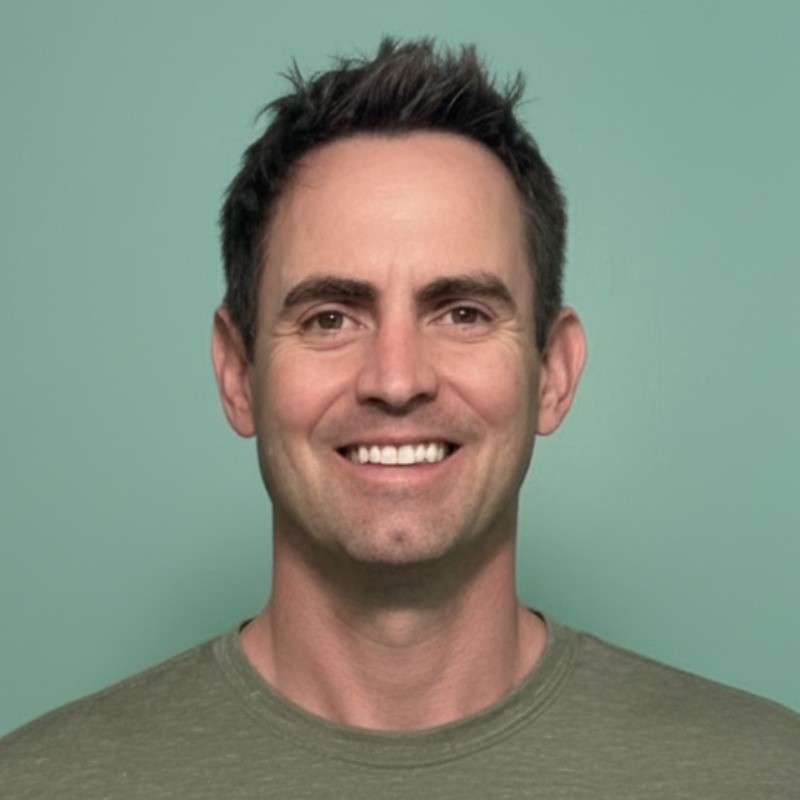


Andrew Youderian disappears into a cave for six weeks every year to crunch data from 300+ seven, eight, and nine-figure store owners — and comes back with the most honest read on the state of e-commerce you'll find anywhere. This year's survey has a few takeaways that sting: AI adoption hit 73% but produced zero measurable financial edge in 2025, Amazon has quietly slipped from growth engine to supplemental channel, and the single biggest profit lever isn't a tactic at all. Brett and Andrew dig into what the numbers actually say — and what operators should do about it before everyone else catches on.
Inside the episode:
- Why Amazon's share of revenue has fallen back to 2017 levels even as more brands sell there — and the "build a brand, sell on Amazon second" shift behind it
- The 92% vs. 17% gap: how store owners really feel about selling DTC versus Amazon (and why the P&L explains it — 47% COGS vs. 58%)
- The AI gut-check: 73% of brands "meaningfully adopted" it, so Andrew pulled their actual sales data instead of asking for ROI — here's what he found
- The financial-mastery cliff: going from a 4-out-of-5 to a 5-out-of-5 on financial fluency jumps net margins from 9.7% to 14.3% and net income growth ~50%
- The warehouse stat that became Andrew's most viral thread: own your warehouse and grow ~4%, lease or 3PL it and grow 30–35%
- The optimist vs. pessimist breakdown — conversion rate, inventory turns, and fixed overhead — and what separates the two camps
- Why the future belongs to "small, durable brands" — and why the days of hacking distribution are over
—
Sponsored by OMG Commerce - go to https://www.omgcommerce.com/contact and request your FREE strategy session today!
—
Chapters:
[00:00] Intro clip — Andrew on treating AI adoption as a growth tool that didn't pan out in the data
[00:26] Welcome & introducing Andrew Youderian of e-Commerce Fuel
[01:31] Backstory — How Brett and Andrew connected, and e-Commerce Fuel's origins
[03:41] Inside the annual survey — Methodology and respondent profile
[05:27] Amazon findings — Declining revenue share, low seller satisfaction, and P&L economics vs D2C
[11:22] The Amazon land-grab era ending — 97% of brands now use paid traffic
[17:34] CAC, moats, and the Dan Kennedy quote — Spending more to win the long game
[20:19] Amazon as a checkout, not a discovery engine — The 40% off-platform sales stat
[24:53] AI adoption findings — No financial edge despite 75% adoption
[28:26] The nuance on AI — Vibe-coding pitfalls and where AI is actually helping
[31:20] Financial intelligence — Why jumping from a 4 to a 5 out of 5 skyrockets margins
[39:43] 2026 outlook — Optimists vs. pessimists, and the future of durable small brands
—
Connect With Brett:
LinkedIn: https://www.linkedin.com/in/thebrettcurry/
YouTube: https://www.youtube.com/channel/UCQmbMwBW8LYDfFAqNqlgTGw
Website: https://www.omgcommerce.com/
Request a Free Strategy Session: https://www.omgcommerce.com/contact
Relevant Links:
- Andrew’s LinkedIn:/andrew-youderian-ba74a623/
Past guests on e-Commerce Evolution include Ezra Firestone, Steve Chou, Drew Sanocki, Jacques Spitzer, Jeremy Horowitz, Ryan Moran, Sean Frank, Andrew Youderian, Ryan McKenzie, Joseph Wilkins, Cody Wittick, Miki Agrawal, Justin Brooke, Nish Samantray, Kurt Elster, John Parkes, Chris Mercer, Rabah Rahil, Bear Handlon, JC Hite, Frederick Vallaeys, Preston Rutherford, Anthony Mink, Bill D'Allessandro, Stephane Colleu, Jeff Oxford, Bryan Porter and more
Transcript:
Andrew Youderian (00:00):
The punchline is there was no meaningful financial edge from adopting AI. The whole mantra is cut your team size, save money, efficiencies, rah, rah, rah. No, doesn't pan out in the data.
Brett Curry (00:26):
Well, hello and welcome to another edition of the e-Commerce Evolution Podcast. Today I have a longtime friend joining the pod. He is a true OG, maybe the OG of OGs. Andrew Youderian, founder of e-Commerce Fuel, the tightest knit e-commerce community on the planet. And this guy not only is an amazing dude, but he's got his finger on the pulse of the e-Commerce industry. He's out doing live events, talking to community members in the forum, running annual surveys, getting kind of the state of the industry. And so that's what we're talking about today. He did his annual survey. It is a doozy and it packs a punch of really insightful information on the state of the merchant right now. And so we're going to dive into that with some surprises, some takeaways and some speculation as to maybe where these trends will take us. So with that, Andrew, welcome to the show.
(01:30):
And how's it going, man?
Andrew Youderian (01:31):
Brett, good. Thank you for having me on. I appreciate the kind intro. I was thinking about, man, it's been cool thinking back. I think we got connected originally when you were in the Magento world and now you've got a totally different focus. It's been a long time and it's been cool to be able to be along for the ride with you in e-comm. So thanks for having me.
Brett Curry (01:48):
Absolutely. Thanks for coming on. I can't remember if it was Ezra Firestone that introduced us or something that maybe we met at one of his events. I really can't remember, but I remember we used to have that killer e-Commerce fuel wooden sign. I think someone used a chainsaw to carve that thing out of a log or something. And we were doing Magento stuff, which how crazy is that? People were like, Magento, never heard of it. Magento.
Andrew Youderian (02:13):
Yeah, I still have that sign. It's not in this office, sadly. I probably need to move it. But yeah, that was one of the cooler gifts I've received along the definitely good swag.
Brett Curry (02:22):
It's epic. Yeah. Epic for sure. So yeah, man, you've been in this game a long time, had your own store, sold it, started a community. And that was not hyperbole. I am a bit of a hype, man. I like to give good intros for people, but you've built an amazing community. I mean, anywhere I go, if I talk to someone who's a member of e-Commerce Fuel, they are really into it. It's a community where people have built friendships and you can get answers to any question you have related to e-commerce. And so kudos to you for building something that has lasted so long because when did you start e-commerce Fuel? It's been forever ago.
Andrew Youderian (03:01):
Yeah, thank you. I appreciate it. I have had an insane amount of help doing it, so it hasn't been just me. Started writing on the website in 2012 and then launched the actual community after a year of building connections with an audience. So 2013, so it's been about 13 years. Which is wild. Yeah.
Brett Curry (03:21):
Yep. Yep. And still going strong. So as I kind of teed up in the intro, you do an annual survey, maybe you do more than that. You do one huge survey each year, kind of the state of the merchant. And so explain what this is and why you do it, how you do it, and then we're going to dive into the hot takes from the survey.
Andrew Youderian (03:41):
Yeah. So just in a high level nutshell, I go out, we have about a thousand members in our community. I survey them and we get probably the survey is made up of primarily of members in the e-comm fuel community. And then we have some other great partners that help us promote it. Notably the operators network and the podcast, we partner with them and they get a lot of -
Brett Curry (03:59):
Great friends, friends of that pod as well. Yeah, great
Andrew Youderian (04:02):
Podcast. And anyway, so we get about 300 store owners. The average probably looking median store owner in probably the four to five million range, but we have people all the way from a million all the way up to nine figures, 100 million plus. And so I take all the data, I go into a cave for six weeks and just hunched over my laptop and talk, crunching numbers and come out barely alive, but with great insights.
Brett Curry (04:27):
Sleeping on a cart. You're not showering. I just picture your head all a mess.
Andrew Youderian (04:31):
My wife has
Brett Curry (04:31):
Left me everywhere.
Andrew Youderian (04:33):
Yeah.
Brett Curry (04:33):
Bill's
Andrew Youderian (04:33):
Unpaid. It's ugly, but it's worth it because we get this report.
Brett Curry (04:38):
That's amazing. Well, thanks for doing that for us and for the community. And so yeah, man, excited to dive in. You talk about a ton of things, range from paid traffic to AI usage to Amazon. And so lots of hot takes that I want to dive into, but let's start with Amazon. This is something we've got a deep expertise here and some perspective. We've got an Amazon department and been running Amazon since 2016, helping brands grow there. And we've seen some big shifts just with our clients and who is coming to us looking for Amazon help today versus who was looking for Amazon help in 2016, things like that. But walk us through what were the most surprising Amazon findings in the survey and kind of explain the questions that were asked and stuff there.
Andrew Youderian (05:27):
Yeah. And I'm excited to follow up and hear your thoughts too, because you
Brett Curry (05:30):
Are
Andrew Youderian (05:30):
In the weeds on this with a lot of different people. So the two biggest things, if you look at the percentage, we have data going back to 2017. So if you look at the percent of brands that sell on Amazon over time, it's increased for the most part pretty steadily from like 49% about a decade ago to about 63% today. So 50% bump in the number of brands selling on Amazon. So you'd expect that the aggregate revenue generated would increase. But what we saw was that back in the levels, the percent of stores sales that comes from Amazon actually has dropped back to 2017 levels. So 2017, it shot way up and then it kind of plateaued almost at close to 30% around 2019, 2020. And then it's just been declining steadily since then back to 2017 levels. And so it's interesting for me, I see there's more stores selling there, but reading between the lines and cutting to the takeaway for me is it's become more of a incremental channel, a supplemental channel as opposed to a let's go and really use this as a growth engine channel.
(06:40):
So that's one of the biggest ones. And the other one that I think is interesting is if you look at the sentimentality of how owners feel selling on Amazon where this
Brett Curry (06:50):
Is going. I bet everyone can predict where this is going, but yeah, we'd love to hear the data.
Andrew Youderian (06:55):
We recommend everyone grabs a fifth of whiskey when they're sitting down and do their Amazon stuff. If people selling on their own website, 92% of them liked selling on their own D2C website for all the reasons we can analyze if you want to. That number for Amazon was 17%, like a fifth. And those probably would maybe identify as slightly vascular. What is that
Brett Curry (07:20):
Promoter score? That's a bad one. Is that like - Maybe the approval rating of Congress or something, that's bad.
Andrew Youderian (07:27):
It's rough. And maybe the last thing, and then I'll let you ask some questions and give me your thoughts from behind the enemy lines. If you look at the economics by channel, one thing we did was we broke down kind of the P&L. If you break down a P&L, four big spots. You've got your cost of goods sold, which we also can wrap in like fulfillment,
(07:45):
Your ad spender, your marketing, your overhead, and then your net income. And so if you look at D2C selling D2C, the cost of goods sold and fulfillment was significantly lower. It was about 47% on average of your revenues. Look at Amazon, it was 58% of revenues because you've got fees, you've got more fulfillment. It's just you're also not having to pay as much for ad spend and marketing because there's more... You still pay for Amazon ads, but you can make a little bit of that up in the end, but D2C actually ends up being a little more profitable, about 12.5% average net income versus about 11.5% for Amazon. So those are some of the big takeaways.
Brett Curry (08:27):
It's so good. And I'd love to unpack that a little bit and kind of give the perspective from our clients, what I'm hearing, what I'm seeing. And I do think the fee conversation is a huge one. So Amazon ads, that's a big part of what we do to help brands grow on Amazon. It's become pay to play there over the last several years. You pretty much have to run Amazon ads a little bit, at least to launch products to maintain some things. And ad costs are going up on Amazon just like they are anywhere else. But it's really been the fees. Yeah, I don't know exactly the percentage increase, but all the time. It seems like every couple of weeks or whatever, it's like, "Hey, a new fee. Hey, guess what? Amazon is going to make their money off the backs of their sellers. Your margin is their opportunity." They're pushing the boundaries of that until they get all the margin, I guess.
(09:21):
But yeah, not surprised by those sentiment numbers. It's maybe a little lower than I though, but definitely assumed it would be low. And so one of the things we've been talking about for a long time... Actually, did you have something to add to that?
Andrew Youderian (09:37):
Oh, no, I'll follow up. Go ahead and finish your thought
Brett Curry (09:39):
There.
Andrew Youderian (09:39):
Okay,
Brett Curry (09:39):
Cool. So one thing we've been talking about for years is don't focus on increasing sales on Amazon as much as you should focus on building a healthy brand that people want and that Amazon is just a place where some people transact. And I think the days are dying and maybe are dead where people are like, "Hey, there's a new land grab on Amazon. Just go and build a widget or get a spatula source in China and then throw it up on Amazon, optimize that thing, run a few ads, and then SEO takes care of the rest and you're printing money. Those days are gone. Not that you can't still launch on Amazon. We just have the big apparel brand launch on Amazon, but they're like a nine-figure brand off Amazon. We got about a six million run rate now on Amazon only, but they're building a brand and they've got demand.
(10:35):
People want the product, but they just hadn't tapped into Amazon. And so we opened that up for them. And so that I think is where we're headed. Less thinking about Amazon as my BizOp thing and more I'm building a great brand through great content, through great market, through great product development, through community building. And then I'm doing all the smart things on Amazon to be available, to be present, to treat that like the cash register for a certain piece of customers or slice of customers. And I'm going to try my best. And it is difficult, but I'm going to keep that channel profitable. And so yeah, those are a few things we're seeing. I'll dive in more though, but I think you had a follow-up there.
Andrew Youderian (11:22):
Oh yeah. A question for you. So if you have a new client that comes in and they're like, "Hey, should we launch on Amazon?" Do you go do some keyword research on Amazon and largely inform your decision and advice to them based on whether you see branded search on Amazon for their products?
Brett Curry (11:37):
Yeah, that is a part of it. But one of the things we look at is when you start getting into multiple six figures and ad spend across multiple channels, so someone's spending four or 500,000 a month on Meta and they're spending 150 on Google and YouTube and stuff, you just know you're driving a lot of traffic to Amazon because there's still people that want to buy on Amazon and they go there first. If they don't see you, they'll buy something else. We saw this with Boom. We're talking about our mutual buddy, Ezra Firestone. They were D2C for the longest time. We're never on Amazon. And you have these knockoffs. People are like, "Well, shoot." They get the boom stick that everybody wants, but Boom's not selling on Amazon so we'll squat on that brand, so to speak, and sell on Amazon. And so when we launched there and we got that brand to about, we got them to about five million a year run rate on Amazon pretty quickly, but it was a constant fight with these knockoff brands.
(12:34):
So yeah, I think if you're spending a meaningful amount on paid media, you should probably consider Amazon, but there's a few ways to go about it. Maybe it's not your whole product line, maybe it's just some of your hero products.You want to think really in detailed way about your ad strategy. Do you want to run any ads or is it just to try to convert the demand you're already generating? I think there's a real case to be made either way. And then yeah, you got to have someone really watching that P&L, building out that P&L for Amazon and you showed it there. It's a different P&L than the D2C area. And it was probably a time when it was potentially as profitable or maybe more than selling on Shopify, but not anymore for sure.
Andrew Youderian (13:20):
Yeah. And feel free to reign me in here if I'm getting ahead of myself on where you want to take this, but it kind of dovetails nicely. You mentioned the days of just being able to go in and land grab organically or over on Amazon. But I think even broadly, one of the stats that surprised me the most, I don't know if you saw this in the report or if it may, you're in the paid space, so maybe this isn't as surprising, but 97% of all the brands we surveyed are using paid traffic. I though, hey, I knew it'd be a high number. I knew it might be like 70,
Brett Curry (13:55):
75,
Andrew Youderian (13:56):
80%, but 97%, that number shocked me. And what also shocked me was when I dove into the numbers. So I guess the takeaway is we're in a world where for all effective reasons, you have to use paid traffic to make this work anymore. You just can't. It's just table stakes. But what was most interesting was the brands, I did a second layer dive. Okay, what are these brands? I expected the brands that were... The more people spent on paid, the less that they would make. I think the classic wisdom is like the more you spend on acquisition, the lower your bottom line's going to be. Was not the case. What was the case was the brands that were spending more on paid, what unlocked that ability for them to do it profitably was just engineering a really high margin, low overhead business. And so they almost, it wasn't like they were paid experts, they were business model experts.
(14:49):
And that I thought was fascinating.
Brett Curry (14:52):
Yeah, super interesting. I guess that one didn't surprise me as much, but probably because I'm a paid media guy, always been an ad guy. And so everybody that comes to us, it's for paid ads. And so I kind of begin to think everybody does it. But it does make sense in that if you are not running ads, you will be forgotten. People seem less brand loyal or maybe the way to look at it is we're just more open to trying new brands and new experiences as consumers than maybe ever before. And so if you're not front and center, top of mind and always pushing and trying to get new customers, then you're going to lose out. Yeah. And you mentioned the operators podcast recently. I know Sean Frank from Ridge, he talks about used to you'd want to keep OpEx in an e-comm brand at maybe 12% or something like that, like overhead in OpEx.
(15:44):
And then that was 10. And now a lot of people are pushing for eight. It's like 8% of your business is spent on OpEx. And that includes all your staff and warehouse and all that stuff. And that's really low. And so it kind of makes sense. Yeah, you have to invest in paid ads, but where are you finding leverage or areas to cut and to run lean elsewhere? And I think that's kind of what those numbers indicate, right?
Andrew Youderian (16:13):
Yeah. It's so interesting. I was reading something about what, and I've been thinking a lot about this too, what does a moat look like in today's
(16:20):
In the future world? What's a differentiating enough? And if e-comm becomes, and I don't disagree, I think there's a huge push and you have to. What I have found, what they were talking about in the podcast, what I found through diving through a lot of P&Ls from hundreds of store owners, huge competitive advantage. You have to be able to be lean. But I do wonder too, just kind of talking out loud, but if the game in e-comm becomes how lean can I run this operation? It almost kind of makes me think about the early days of outsourcing customer service overseas. Traditionalism was like, oh hey, we'll just put all of our call center people somewhere in countries in Asia and it'll be amazing. We'll cut costs, everyone wins. And it's like, well, no, because you killed the loyalty, the experience for your customer service. And now people definitely notice how it's a huge differentiator when you come back and you call someone and on three rings you get a human that you can quickly intelligently converse with without a language barrier.
(17:23):
Anyway, my point being, I think that's where we're headed, but I do wonder if in the long run it's like is e-comm just going to become an efficiency play and then you lose all the magic of great consumer products?
Brett Curry (17:34):
It's a really good question. Yeah, I would love to opine on that or just hear your perspective on where does this go from here? I do think AI has a role in this, although you got some interesting findings on AI that I'm excited to dive into in a minute. But yeah, I think people are finding efficiencies any way they can. And I do think one of the realities in kind of a post - COVID world, and this is what a lot of the hyperscalers are seeing as well, is that most people are probably just overstaffed. We just kind of felt like growth was going to be on this hyperbolic curve forever and the only way to really grow was headcount. And I think almost in some ways at an agency, and so we're very people driven, but I think we almost had some pride in our headcount, which is a silly thing to...
(18:18):
My overhead is huge. That gives me a sense of pride. But I think that's all been reversed. No, no, no, lean is cool. Let's not be inflated or bloated there with our OpEx. And so yeah, I think that is a trend that will continue. I think there are ways to still stay human and stay connected with your customer, places like Ridge, they've been able to do it and others, Jones Road Beauty and many others. I do think this kind of underscores a principle that I heard a long time ago that I always loved. I think a lot of people talk about, "Hey, I'm going to run paid ads, but I'm going to find the agency or the team or the in - house or whatever. We're going to continually drive down our customer acquisition costs. Lower CAC, that's what we want. " And while that is a noble pursuit, probably, there's this old Dan Kennedy quote, I don't know if you were ever a fan of Dan Kennedy back in the day, but he said, "The brand that can spend the most to acquire a customer wins." And what I like about that quote is not that we should just spend recklessly or try to use that as a source of pride that I spend more than anybody else, but it's do I have the LTV that could support higher spend?
(19:32):
Do I have the conversion rate that could support higher spend? Do I have the margin that could support my engineering, my brand where I can spend more? Because the reality is customer acquisition costs aren't going down. They won't. Ad platforms are going to continue to go up in price. There's kind of an equilibrium I think that the market finds, but costs aren't going to go down. Rices aren't going to go backwards. And so I think finding the ability, can I spend more to acquire a customer? I think that's going to give me a competitive edge in the long haul. And we talk about moats, I think that can be a moat where I know Ridge, they spend almost half of their revenue on marketing. That would not work for most brands, but that's what they do. It's pretty crazy. Yeah,
Andrew Youderian (20:19):
Agreed.
Brett Curry (20:20):
And then one other note on the Amazon piece, just did a big event that I spoke at in Nashville, mostly Amazon sellers. But one of the data points that came up, and we're saying this too, is that now up to 40% of your sales on Amazon don't originate on Amazon. So they come from exposure on TikTok or Meta or YouTube or friend or whatever. And then people just convert on Amazon where there was a day when sellers would say, yeah, all of my sales come from organic search on Amazon or paid search on Amazon. That's where all my sales come from. That is shifting where now, and I think I heard you mention this, I can't remember if it was on a pod or somewhere else, where product discovery doesn't really happen that much on Amazon. Only if I'm actively searching for something, but probably discover a product on social buy on Amazon.
(21:15):
And so again, building a brand first, selling on Amazon second.
Andrew Youderian (21:19):
I'm surprised that number isn't higher. I think it depends what you're shopping for too. If you're shopping for batteries, AAA batteries, okay. Yeah, a lot of that happens on Amazon. But if you're shopping for
(21:28):
Anything that is unique, especially in that middle tier, I kind of look at products as your commodity items, i.e. Batteries. Amazon's great for that. Your very high-end national brands, pair of Nike shoes. I've probably bought the same pair of Under Armour tennis shoes six times because I'll wear a pair, I'll frash them. I don't want to... I just like, they worked, reordered for you. Works, boom, boom, boom. Works. Great, easy, done. Any kind of discovery in that messy middle where it's something that's not a national brand, it's not deeply trusted, it's not cheap enough to not matter if it ends up being a dud, which is a lot of products and all the interesting products, right? All the products that have soul and are unique. I don't look for any of those on Amazon. Maybe I buy them occasionally on Amazon, but increasingly I'm trying to buy them more off Amazon or I just buy them off Amazon because it's easier.
(22:14):
I think a lot of... So anyway. Yeah.
Brett Curry (22:17):
This episode is brought to you by Pretty Damn Quick. Here's a number that should keep you up at night. $270 billion is lost to checkout every year. CAC is up, margins are thin, and yet most brands have personalized everything. Ads, emails, PDPs, and they've left checkout as a static form. It's a black box, a finish line where revenue quietly bleeds out. PDQ changes that using over 1600 real time signals. PDQ dynamically segments every shopper, first time versus returning, high value versus low intent, GEO urgency fulfillment, context and personalizes shipping prices, delivering promises, upsells, and incentives in real time. Every element is continuously AB tested and optimized for profit at checkout for each checkout, not just conversion rate. The result, 20 to 30% uplift in revenue per checkout, five to 15% conversion improvements, 10 to 25% AOV lift, cross over a billion checkouts served and they back it up with an RO guy guarantee.
(23:28):
If they don't deliver, you get a refund. And listen, some of our top clients love PDQ, Jones Road Beauty being one of them, and they are the real deal. These guys are super, super smart. Best thing to do, get a deep dive audit on your checkout. See what PDQ can do for you. Again, that's Pretty Damn Quick. Go check out what Avi and the gang over there have to offer. I want to transition and talk. So we talked to Amazon, talked paid media a little bit. I want to talk AI in just a second. But yeah, I do think there's also a growing sentiment with shoppers, and I hear especially the younger generation of shoppers that don't want to buy on Amazon. That tends to be a bit of a growing trend. And then it's just kind of easy now. Once you buy from a couple of different Shopify stores and everything is saved in the shop app or whatever, it's pretty easy to check out.
(24:16):
So all the advantages Amazon had with checkout, it's not as strong. It's not as big of a mode as it used to be.
Andrew Youderian (24:22):
Brett, I'm flattered you would lump me in the category of younger shopper. That made my day. Thanks, man. Appreciate it, Dad.
Brett Curry (24:30):
Hey, so young at heart, man. We're OGs, still young at heart for sure. Let's talk AI a little bit because this was an interesting find. And so talk about what you found related to AI adoption amongst e-commerce brands, but then talk about the data you dug into because personally, I love the way you approach this.
Andrew Youderian (24:53):
Yeah, this one was fascinating. And I think it's been interesting too, because released these findings probably in February or March, but March of this year, a couple months ago recording this late May of 2026. And I think even in the last month or two since we released it, there's been a lot of other reports that have come out to confirm I think the findings here. So what I did is I asked all of the people who participated over 300 brands, "Are you using AI meaningfully?" One of the questions was, "Have you meaningfully adopted AI to improve your business?" And over almost three quarters said, "Yes, we have. " And then I actually looked at the financial performance between the brands or AI adopters and were not. And we can get into the numbers if you want, but the punchline is there was no meaningful financial edge from adopting AI.
(25:43):
The whole mantra is like, "Cut your team size, save money, efficiencies, rah, rah, rah." No, doesn't pan out in the data, which is fascinating. So that's the punchline. I'll stop for a minute and let you dive in.
Brett Curry (25:58):
Yeah, it's really interesting. One, I love that you did the self-reported angle. Tell me your perspective on this. Did you invest significantly in AI or did you not? And that totally makes sense that that would be self-reported. I love that you then didn't ask for the ROI. You looked in the sales data because they provided the sales data. Because I do think we would all, those of us that have been claw-pilled or that are really leaning into AI, we would maybe be tempted to be like, "Oh yeah, it's been great. It's been awesome. I love it. " I
Andrew Youderian (26:28):
Wish I would've done that. Sorry to interrupt, but if I would've been smarter, I would've asked the next follow-up. Has it actually meaningfully improved your business? And everyone says, "Oh, of course it has." And then you look at the data and it's like, no, you're just completely delusional.
Brett Curry (26:41):
It would've been great to have done both for sure. So I think there's a couple things here that I love your perspective on. I know for me, if I'd taken the survey in January and compared what I was doing with AI then versus what I'm doing with AI now, it is quite different. And I think for me, this has been my journey. I think this is probably similar for a lot of brands or other agency owners where it's like early you learned how to prompt better the whole prompt engineer thing. That's going to be the hottest job, prompt engineer. It was for five minutes where it's like, okay, yeah, if you ask better questions or create better prompts, get better responses, that's cool. So I've been using Claude for about a year and I started just prompting it better. And then I started creating Claude projects, giving Claude deep context to a client I was working on or a project I was working on made a huge difference.
(27:33):
It instantly became amazing. And then I learned about Claude skills. And then it's like, hey, all these processes that can take forever in your business or even creative analysis or data analysis or whatever, if you build a skill related to exactly the way you want this done with Claude, it can become a workhorse. And so that's just, I feel like since maybe March of this year, I've gone from occasionally using it and feeling pretty good about it to I'm in it daily and cranking out some pretty good stuff. But I still don't know that I could put an ROI on it. But yeah, I guess my main point is it's accelerated so much since January. I'd be really interested to see what the next version of this survey is because Claude added 30 billion in ARR in April alone or something crazy like that. It's really just exploded here recently.
Andrew Youderian (28:26):
I think my take on this is very nuanced. I think 2025 results were, like we talked about, it did not have an edge. But I don't expect this to persist into the future. I think you're right, huge improvements over the last two to three to four, Q1 of 2026 was maybe even doubling or tripling the effectiveness of a lot of things, particularly on the coding side. I do think I look at our business and in 2025, we wasted an unholy amount of money trying to build out in - house AI tools because we though we could. And we paid -
Brett Curry (29:00):
It
Andrew Youderian (29:00):
Was
Brett Curry (29:01):
Vibe coding. Yeah, we're going to vibe code our own salesforce. We weren't even
Andrew Youderian (29:04):
Vibe coding side. We were trying to build out our own AI internal brain and paying someone to do it. And it ended up being to the point where... Anyway, we did not have the discipline and judgment. Something I said the other day recently was like, when you can build anything, you have to be really careful you don't build everything. And so you got to be super disciplined. But I also think that there are people that are very lean, that are incredibly tech savvy and forward-thinking and process savvy that are using AI in phenomenal ways to build businesses. So I think there's a lot of nuance here. It's not just that AI doesn't work or it does work. But yeah, it's a great launchpad for some interesting conversations and to think how well you're doing on that spectrum.
Brett Curry (29:47):
Totally. Yeah. And I think just like with anything else, just like when you're first learning to run paid ads or you're first learning to read a P&L and doing some finance work, you're going to kind of suck at it at first and you're going to feel like you're gain I mean, a lot of skills, a lot of wisdom, a lot of knowledge, but you're not really seeing anything from it. And then I think it just happens. It catches up. But I've heard a lot of people talk about the layoffs that have been happening with the big tech companies and others that say, "Well, yeah, AI," that a lot of people are just using that as an excuse. It's just they're right-sizing based on where they are now. Most of those companies were bloated with headcount things. So I'm still very bullish on AI, but I do think it's going to be a little while.
(30:32):
I think we may still see an ROI later this year, that type of thing. It's definitely helping in a few ways, but then you're trying to invent, trying to create in others. And so what the net net is there is hard to say, but I'm definitely long-term bullish there for sure. One of the things I though was fascinating and I love this take and I'm just hearing this more in the industry overall is having deep financial expertise and understand financial engineering where it's almost a return back to just good business principles where for a while it was like, "Hey, I can just rank on SEO and print money and I'm a drop shipper and then I'm doing this Amazon thing and then I'm just running paid ads because everybody's buying online. It's COVID and I'm printing money. We'll worry about margin later." To now people are running a real business it feels like.
(31:20):
And so what did the survey uncover there around financial expertise?
Andrew Youderian (31:25):
Yeah. And this is something that's kind of an area of passion for mine. I love finances back then. Always has been. Yeah. I mean, I come from the finance world. I like geeking out on this kind of stuff. And so the heart of the question was that I asked people was what's your level of financial intel? How well do you feel like you have the finances in your business mastered or just your level of financial intelligence overall from one to five? And again, I'm just going to cut straight to the big takeaway. The big takeaway was you would expect that if you went from a one to a four, a two to a four, or even a two to a five, you'd see a big jump. But what was fascinating is the jump that you make, it is incremental, but the jump that you make from going from a four out of five to a five out of five is really huge.
(32:14):
So we controlled, let's just take this analysis. We controlled for business owners that were in the one to $5 million range. And we did that because I wanted to kind of get a sense of like, okay, the longer you're in the game, the more experienced you're going to have. Of course you're financial, so let's control for that. And when you look at going from a three out of five to four out of five, your margin jumps a little bit. It jumps from an 8.9% net profit margin to a 9.7, which is good. But when you go from a four out of five to a five out of five, your net margin on average goes from a 9.7 to a 14.3. It just skyrockets upward. Your net income growth goes up. 50%
Brett Curry (32:53):
Growth rate, right? Yeah. Or there's an increase in profits. Yeah.
Andrew Youderian (32:57):
Yeah, 50% more profits from just taking that final step to going from, I feel pretty good, to I feel great about this. And I'll spare you the rest of the statistics, but they kind of follow a similar trajectory. And to me, what that says is next to understanding your customers and your product and maybe on par with it is deeply understanding the finances for your business because e-comm is complex from a cashflow forecasting and management perspective, especially if you're growing quickly. It's complex from an accounting and an inventories based perspective. There's just a lot of complexity there. And if you deeply understand that and understand how much cash you have in the future and what the implications are, you can make better decisions, you can forecast better, you can allocate better without as much fear or risk. And if you don't, you're just kind of guessing and guessing is not a great strategy.
(33:55):
So big takeaway, if you don't feel phenomenally in tune and competent with your financials, upgrading your financial skills probably one of the best ROIs you can do as an owner.
Brett Curry (34:06):
Totally agree. It is arguably the most important thing you can do. And I do like the way you phrase that. Number one, obsessed about your customer, know what they like, know what they want, obsessed about great products and stuff. But close second, financial engineering, understanding the finance of your business. What do you think are the areas to start on first? So if someone would score themselves as a three or as a four, what do you think it takes to get to the five level?
Andrew Youderian (34:36):
I think if you're going to be on a five level for e-comm, I'd say a few different things. The first one is deeply understanding how your P&L or your income statement, same thing, your balance sheet and your cashflow statements are all interconnected. If I
Brett Curry (34:51):
Said like - Those financial statements that someone's like, whoa, you just sent me back to accounting class and college. Yeah, I got to know those things. Yeah.
Andrew Youderian (34:58):
But I mean, it's important. If I say, Hey, you just bought inventory, you just made a $50,000 PO for inventory, tell me the implication. What would be the entries you would make and how would that impact your balance sheet versus your P&L? I would guess maybe a third of entrepreneurs in the seven figure plus range could tell me accurately, okay, here's the exact things that would change, which is too low. So that's the first one. The second one is understanding how to do a cashflow forecast. Like, hey, how do I go from where I am now and with some basic assumptions, be able to understand on a 13-week rolling basis where my cash is going to be in the future? Cash management is the name of the game. So getting there, one thing I've put together, I've put together this class on the eight pillars of financial mastery for entrepreneurs.
(35:49):
It covers all the stuff we're talking about as well as how to think about making sure your business success translates into personal wealth because that's not also a given. A lot of times people will just keep doubling down, doubling down. Anyway, so for people who are curious about that, if you go to ecommercefuel.com/mastery, you can download the full guide on all eight of those steps. It's not a paid thing. It's just kind of a free thing for the community. Amazing. But those would be the first two things I would recommend for gauging like where am I at?
Brett Curry (36:18):
Highly, highly recommend getting that resource go deep on that. It's one of those things that I bet most business owners, I know I was this way early on, P&L feels natural. It's like expenses and income and you're just doing some basic math to figure it out. And so it's like, "Hey, sweet, I'm profitable." But it really comes to light when you're looking at, "Yeah, but do I have any cash? And will I have any cash in nine weeks or 13 weeks? What does that look like? " And then as I add different channels, if I'm D2C only, that's one thing. But if I'm D2C plus Amazon plus other marketplaces plus retail potentially, now my cash forecast becomes very complicated potentially. And then balance sheet. We started looking at M&A a couple years ago as an agency looking at acquiring other agencies and started looking at balance sheets and realizing, oh shoot, some of these businesses have negative equity.
(37:09):
They are not worth nothing. They're worth negative. And so understanding how all those three play together is key. And it's just one of those things when you're a teenager in your 20s, do you really have to get a physical and look at your blood work? Probably not. If you're able to still go out and run and do things, you're probably fine. When you're in your 40s, you better do some tests, man. I'm doing blood work a couple times a year, doing a physical, all these things. I want to know. And I want to know what do I need to optimize? Because if I can tell a big difference if I'm sleeping well or not sleeping well or if I'm working out or I got to eat way cleaner now than I used to, things like that. But I think the same is true for your finances early on, sure, do whatever.
(37:54):
But you got to reach a level of maturity or you're just going to run into trouble.
Andrew Youderian (37:58):
Yeah. And I think last thing Ed here, a lot of times they're not as intuitive as you'd think. For example,
(38:05):
If you get a bill, you would think, oh, okay, well that's going to use cash. But if you don't pay that bill, it's actually, if you look at your cashflow statement, it actually is a source of cash on your cashflow statement because it'll show up on your P&L, but it won't actually hit your cash statement until you pay it. So the singles are counterintuitive and each one of those statements tells you something a little bit different about your business. P&L tells you, are we building something sustainable that if we can keep going, we're going to have something meaningful and profitable and valuable in two, three, four years. Your balance sheet tells you, wow, how stable structurally is our business? Can we withstand shocks or are we one week away from becoming insolvent? And your cashflow forecast, which is actually not one of the balance sheet, big three financial statements, tells you if you're going to run out of cash to be able to keep going.
(38:50):
So it's just understanding them all, they all tell you something slightly different. And if you don't understand the implications, you're kind of flying an airplane without instruments in the clouds.
Brett Curry (38:59):
Which is not a good idea. Love that comparison. It's also one of those things too, that the deeper you go on finance and the more you understand it and the more you see the way this all plays together, it gives you a level of confidence at which you can play the game. It really impacts every other decision you make. And so highly, highly recommend it. And then you also start to get a sense, and I've been this way now for a while in my business, I get a report from inside the business or whatever. I'm like, "That report's wrong." I know those numbers and that number is not possible. So then it's like, "Oh yeah, we missed this. " Anyway, as you start to really know your numbers, it just changes the game for you. Now I'm inspired to take your course. And so yeah, excited to look at that.
(39:43):
Let's kind of wrap with this final outlook or anything else. You want to plug a few other things and then I definitely want you to plug the community for people that do not know about it. But what's the outlook? Because you asked people about what is their outlook for in the future type of thing. What did the survey say there?
Andrew Youderian (39:59):
Yeah, so it's funny. I love this. So one of the funniest things is we asked how many people are using or the effectiveness, the efficacy of AI. And the biggest priority in 2026 for entrepreneurs, despite the fact that AI didn't move the needle for them was AI.
Brett Curry (40:17):
But it will, Andrew. It didn't. 100%.
Andrew Youderian (40:20):
Oh yeah. Checks in the mail, Brent.
Brett Curry (40:22):
It's definitely coming. Isn't that an entrepreneur? It's like, "Hey, yeah, I know it hasn't worked at all yet, but I'm going to make it work." Yeah.
Andrew Youderian (40:29):
Yes. So that was funny. I love 80% of owners are optimistic about the future, which kind of speaks to just -
Brett Curry (40:37):
We got to be a little bit delusional to
Andrew Youderian (40:39):
Rosemary. You got to be optimistic. And this is what's interesting. I think there's a lot we could say about the future, but I think maybe the most helpful thing for people listening is I broke down the optimists versus the pessimists in terms of different things. And so I'm just going to rattle a few things off here in terms of where the big mechanics are in their business that maybe they wouldn't be able to point to this, but these are the underlying foundational issues that I think contribute to them being optimistic or pessimistic.
Brett Curry (41:06):
Love it. Love it.
Andrew Youderian (41:06):
Conversion rate. Optimistic owners have a two and a half percent conversion rate versus about 1.84 for pessimist owners. The optimistic owners are turning their inventory faster every year so they're going through the inventory. They have less capital and working capital tied up the inventory. They have less - Cash flow's better,
Brett Curry (41:23):
Interest rate's better, all those things. Yeah.
Andrew Youderian (41:25):
Yeah. They have less inventory as a percent of revenue just overall.
(41:31):
Optimistic owners are significantly more likely to lease a warehouse versus own it. So the optimistic owners, 31% of them lease a warehouse, 15% own a warehouse. Of the pessimistic owners, you are twice... The pessimistic owners own at 30%. So 30% of them own a warehouse versus 15% owning a warehouse. Actually, this is something that was interesting. This is maybe my most viral Twitter thread ever. The difference, slight sidebar, but it's so fascinating. If you own a warehouse, your average revenue growth is 4%. If you lease or 3PL it, you're in the 30 to 35% range. Whoa.
Brett Curry (42:10):
Major takeaways, sell your warehouse if you
Andrew Youderian (42:12):
Have one. Yeah, no, no, just give all the inventory away. Whatever you need to do. Which I think there's some correlation or some correlation. It's not all causation, but that was one of the most staggering stats, I think. Anyway.
Brett Curry (42:24):
I would not have guessed that. That is amazing though. That's super interesting.
Andrew Youderian (42:28):
Yeah. And last number to maybe add one last one and then fixed overhead optimistic owners are sub 20% of their revenue is fixed overhead, whereas pessimistic owners are almost 25%
Brett Curry (42:40):
For fixed
Andrew Youderian (42:41):
Overhead.
Brett Curry (42:42):
Did you look at the optimistic versus pessimistic and how they scored themselves on the financial score? Are they between three, fours and fives for who's optimistic? I did
Andrew Youderian (42:54):
Not. I could do that in about five minutes if we want to circle back there, but I don't have that. I did not ask that or
Brett Curry (42:59):
Build that in the study. That'd be interesting to see. But all those other ones make sense. Nothing's going to ruin your day, week, month, your night of sleep, having too much inventory or maybe dealing with warehouse staff and staff turnover and stuff like that. Or having inflated overhead or OpEx that's out of whack. Those are all cause for heartburn for sure. Yeah. Super interesting. What is your general rate? I know we're about out of time. You got a hard stop. Your look ahead, Andrew, what have these trends continue? Do you think any will reverse? Are you optimistic or pessimistic? Would love just your general take on this.
Andrew Youderian (43:44):
Yeah. I mean, I think I'm part of that 80% of maybe just optimistic, maybe delusional, maybe a combination of the two. A couple of things I'm pretty confident about. I'm pretty confident humans are going to keep buying stuff, physical items. And I'm pretty confident they're going to continue to do it increasingly if not the same level or increasingly online. Agreed. So when I think about e-comm, I feel pretty optimistic about the future. I think what looks different is I have this theory and I need to round it out a little bit more, but this idea of the future belonging to small, durable brands. And I think for the last 10 years, we've been 10 to plus years, maybe 20. We've been in an era of e-commerce where maybe decreasingly recently, but at some spectrum, you've been able to hack distribution to build a business. There's this new thing, it's been e-comm, those days are over.
(44:32):
And I think we've come full circle where you've got to be really savvy running a business. You have to build something people want. But more than anything else, you got to build a great product that people care about and are willing to spread the word about. And so I think the future belongs to brands that yes, they can use digital advertising and paid traffic intelligently. Yes, they run leanly, but more than anything else, they can also build something valuable that people share with word of mouth and that people care about. And it's going to take longer to build those brands because you've got to... It's building things that have real stickiness takes longer, especially when... But I think they're going to be more interesting. I think they'll be more around longer. I think they'll have a longer lifespan. So harder upfront. But I love those kind of brands.
(45:17):
Those are the brands that I get excited about.
Brett Curry (45:20):
Yeah, I love that. Durable brands, small nimble brands. I think that's awesome. I totally agree with you. I think, and this is going to sound a little bit cheesy, but I mean, the world's a better place when you have really great small brands that the founders care about the product and they care about the customer. Our lives are made better. Our lives are enriched by that. It's almost like just the great local restaurant that just is passionate about amazing food and not just heating stuff up in the microwave in the back, but making a great dish. We're made better because of it. And so yeah, I'm here for that. I love that. As we wrap, Andrew, for people that are like E-commerce Fuel, never heard of it, how can they find it? Let's mention that financial resource one more time, but also how can they get plugged into the forum and some of your live events and things like that?
Andrew Youderian (46:05):
Yeah, thank you. So eComFuel or E-commerce Fuel, it's a community for seven and eight-figure and a handful of nine-figure store owners. So we have about a thousand members. The big thing is it's a place where you can come. It's at least a little biased here, but pretty sure we're the most active private community in terms of activity discussions online for serious store owners. So come in, get questions answered, talk with people who get it. It's a great place. So it's for seven figures and above. You can learn more at ecommercefuel.com. That financial mastery series that I mentioned, ecommercefuel.com/mastery, it's just a free guide, about 30 pages walks you through all those pillars to really go from a three or a four out of five to a five out of five. If you want to get the trends report we just talked about, ecommercefuel.com/blueprint, that's all the blueprint of what we learned, how to build a great business based on reverse engineering, other stores.
(47:01):
And then podcasts, do a weekly podcast as well about e-comm. But not just e-commerce, but the tagline for the podcast in our community is helping seven to eight-figure store owners build incredible businesses and amazing lives. I think that's a big part of it too, is how do you build something meaningful without selling your soul and abandoning all the people that are important in your life? And that's a
Brett Curry (47:22):
Huge part of what we do. Yeah, engineer, think about what is it that you actually want from this thing and engineer it to deliver that. And yeah, being an online entrepreneur can be a bit lonely, so get plugged into a community where you can learn, build friendships and enrich your business and your life. With that, Andrew, you darien, ladies and gentlemen, Andrew, awesome as always and really appreciate the time, man.
Andrew Youderian (47:47):
Brett, always love geeking out about this. Thanks, man. Thanks for the time and good talking.
Brett Curry (47:51):
Yep. Talk soon. Thanks. Hey, as we wrap up this week's episode, I want to mention if you're a great brand, if you're scaling high seven, eight, nine figures in D2C or omnichannel, we should potentially talk. We've worked with some of your favorite brands and we'd love to consider working with you as well. We are masters at unlocking new channels like YouTube, unlocking new scale on platforms like Amazon where we can add up to eight figures in new growth. And we've got multiple ways we can work with you. So we can do the full service thing and work like a partner with your team and really run everything or we can offer consulting. So maybe you've got an internal team that really knows their stuff, but there's an area they don't know really well and they'd like to get some consulting, we can do that. We also have tons of free guides, free resources, free materials you can check out all of that.
(48:41):
Get started at omgcommerce.com and we can't wait to help you scale profitably. I


.jpg)
.jpg)


.png)

